info@innovativecleaning.co.uk

0808 280 2662

Commercial Cleaning Services in Birmingham and the UK: The Complete Guide

commercial-cleaning-services-birmingham-uk-guide

Innovative Cleaning Services is a Birmingham based commercial cleaning company that has operated since 2010. We support businesses and manage properties across the West Midlands, the East Midlands, Greater Manchester, London and High Wycombe. This guide sets out what our company does and the services we provide, without turning every answer into a sales pitch.

Key Takeaways

  • Commercial cleaning covers routine, deep and specialist visits, priced against building size, frequency, scope and risk rather than a single flat rate.
  • A dependable provider offers vetted, trained staff, a documented service level agreement and clear compliance controls, not just a low quote.
  • Innovative Cleaning Services covers Birmingham, the wider West Midlands and locations across the UK, with services spanning offices, industrial sites, communal buildings and more.
  • Work related ill health and injury cost UK businesses billions of working days every year, which is why routine cleaning sits inside health and safety compliance, not outside it.

Why Businesses Choose Innovative Cleaning Services

  • Since 2010, Innovative Cleaning have built a reputation across Birmingham and the wider UK on dependable delivery, not just a competitive quote.
  • Every cleaner is DBS checked and BICSc trained, so you get consistent, accountable standards on every single visit.
  • From a single office to a multi-site portfolio, our tailored plans and flexible scheduling are built around how your business actually operates, not a generic package.
  • Transparent, scope based pricing and a satisfaction guarantee mean no hidden costs and no surprises once the contract begins.
  • Genuine coverage across Birmingham, the West Midlands and the wider UK means one accountable point of contact, wherever your sites are located.

What Does Commercial Cleaning Actually Include?

Commercial cleaning covers routine, deep, specialist and requested visits that keep business premises clean, hygienic, safe and suited to the operations carried out inside them. Before contacting a cleaning company, it is worth asking a simple question: does this provider offer the type of cleaning my premises actually need? A sound cleaning plan reflects the building itself, the people who use it, the surfaces and equipment present, the nature of the operations and the compliance controls that apply.

Our standard service adapts to the needs of each site. General cleaning typically covers rooms, work areas, entrances, outdoor spaces, washrooms, kitchens, floors, frequently touched surfaces and internal glass, among other areas. Visits may take place daily, several times a week, periodically or as a single scheduled clean.

Deep cleaning addresses tasks that routine visits do not fully resolve. This can include carpet cleaning, detailed room cleaning, kitchen degreasing, oven and refrigerator cleaning, washroom descaling, window frame cleaning and the treatment of heavy built-up dirt or residue.

Some premises also contain server rooms, HVAC plant or other electrical and mechanical assets. We can arrange controlled cleaning around these areas, subject to a risk assessment, access permission and the client’s own site procedures.

This service is not limited to offices and hotels. We support factories, warehouses, logistics hubs, retail premises, schools, gyms, communal buildings and managed residential properties, including our communal area cleaning service for blocks, HMOs and student developments.

Why Workplace Cleanliness Matters Beyond Appearance

A clean site is often judged on presentation, but the underlying reason for routine cleaning sits in health and safety compliance, not just first impressions.

HSE’s most recent Key figures for Great Britain 2024 to 2025 record 1.9 million working people suffering from a work related illness, alongside 40.1 million working days lost to work related illness and injury, at an estimated cost of £22.9 billion. Cleaning alone does not remove these risks, but poor site cleanliness contributes directly to slip and trip hazards, the spread of infection and exposure to hazardous substances, all of which fall within an employer’s duties under the Health and Safety at Work etc. Act 1974.

Treating cleaning as part of a wider risk management approach, rather than a cosmetic extra, is what separates a compliant site from one that simply looks tidy.

What Makes a Cleaning Company Right for Your Business?

The useful question is not which provider makes the biggest claim. It is which provider can offer trained staff, a flexible schedule, safe working methods and consistent supervision throughout the contract.

Since 2010, Innovative Cleaning Services has built its approach around a set of practical standards:

  • Our cleaners undergo checks through the Disclosure and Barring Service (DBS) to support safer access to client premises.
  • Staff receive instruction on cleaning methods, chemical handling, personal protective equipment (PPE) and equipment use.
  • Training through the British Institute of Cleaning Science (BICSc) supports consistent skills and recognised industry practice.
  • Appropriate insurance supports every contract and protects both parties should a covered incident occur.
  • We use concentrated, low impact products where they suit the task and the client’s preference, supported by controlled dosing and water conscious methods.
  • When a confirmed task falls below the agreed standard, we arrange corrective work at no extra cost.
  • Agreed working hours, task lists, inspections and clear escalation routes keep the service under control.

A dependable service also depends on clear communication. We make sure every client knows who manages the contract, how issues are reported, what the cleaning team will complete and which tasks sit outside the agreed scope.

In House Cleaning Team or Outsourced Provider?

Many businesses weigh up whether to build an internal cleaning team or outsource cleaning services. Neither option suits every organisation and the right choice usually depends on site size, budget certainty and how much time management can give to overseeing cleaning directly.
Consideration In House Team Outsourced Provider
Staffing and cover You manage recruitment, training and sickness cover directly. The provider manages staffing, training and cover as part of the contract.
Compliance responsibility Sits fully with your business, including COSHH, PPE and equipment duties. Shared with the provider through the service level agreement and their own procedures.
Flexibility Can be harder to scale up or down quickly. Schedules and staffing can flex with notice as site needs change.
Specialist equipment Usually purchased and maintained in house. Typically supplied and maintained by the provider.
Cost structure Fixed staffing cost regardless of demand. Cost aligned to agreed scope, frequency and contract terms.

Commercial Cleaning Services We Provide by Industry

Commercial cleaning varies by industry because of the spaces involved, the nature of the operations and the compliance standards that apply. Before preparing a cleaning plan, we consider the type and size of the spaces, footfall, operational risk, surfaces and the equipment in use. These factors shape the products, procedures, staffing levels and supervision required. Innovative Cleaning has sort all types of solutions for all kind of cleaning requirements.

How Is Commercial Cleaning Costed?

A single headline rate rarely reflects the true cost of a cleaning contract. We assess a range of cost drivers before proposing a price:

  • building size, layout and number of areas
  • cleaning frequency and contract duration
  • the number of cleaners and level of supervision required
  • routine, periodic and specialist tasks
  • property type and operational risk
  • daytime, evening, overnight or weekend working
  • equipment, products and consumables
  • access restrictions, parking and mobilisation needs
  • reporting, auditing and compliance requirements

Our pricing follows a discussion and, where appropriate, a site visit. We then prepare a service level agreement and scope of work before finalising the commercial proposal. Pricing may use an hourly rate, a fixed price per visit, a monthly contract charge or a single project figure. Requested work is priced against the specific request, since labour, equipment and timing vary considerably.

Cleaning Compliance and Regulations We Follow

Compliance shapes how we plan, deliver, supervise and review every contract. We follow applicable statutory duties and apply recognised quality, environmental and safety principles within our operating procedures. The Health and Safety Executive (HSE) cleaning guidance informs how we manage common cleaning risks.

  • Health and Safety at Work etc. Act 1974: we protect workers, clients, visitors, contractors and the public through controlled, supervised cleaning operations.
  • Management of Health and Safety at Work Regulations 1999: we assess site risks before work begins, then apply suitable controls, staffing, equipment and supervision.
  • Control of Substances Hazardous to Health Regulations 2002 (COSHH): we control chemical selection, storage, dilution, labelling, training, PPE and spill response procedures.
  • Provision and Use of Work Equipment Regulations 1998: cleaning equipment is kept suitable, maintained, inspected and restricted to trained, authorised staff.
  • Personal Protective Equipment at Work Regulations: suitable PPE is provided where risks remain, covering correct selection, use, care, removal and storage.
  • Manual Handling Operations Regulations 1992: lifting, carrying, pushing and pulling tasks are assessed, and risks are reduced through safer methods and equipment.
  • Reporting of Injuries, Diseases and Dangerous Occurrences Regulations 2013 (RIDDOR): qualifying incidents are recorded, investigated and reported, with corrective action introduced to prevent recurrence.
  • Environmental Protection Act 1990 and the Waste Duty of Care: waste is stored, separated and transferred safely through authorised arrangements, supported by the required documentation.
  • BS EN 13549:2001, Cleaning Service Quality Measurement: quality is measured through defined outcomes, inspections, service records, corrective actions and supervisor verification.
  • ISO 9001 quality management principles: service quality is controlled through documented procedures, competence checks, performance monitoring and continual improvement.
  • ISO 14001 environmental management principles: environmental impact is reduced through controlled chemicals, water efficiency, waste separation and pollution prevention.
  • ISO 45001 occupational health and safety principles: occupational safety is managed through hazard identification, risk controls, training, consultation and continual improvement.

Additional duties apply depending on the site. These include the Work at Height Regulations 2005 for high level window cleaning, food hygiene controls for kitchens, infection prevention procedures for healthcare settings, the Construction (Design and Management) Regulations 2015 on applicable projects, and specialist controls for clinical, chemical or hazardous waste. Our environmental planning also considers recognised WRAP resource efficiency guidance where relevant.

Quick Definitions

What is commercial cleaning?

Commercial cleaning is the routine, deep and specialist cleaning of business premises, covering offices, industrial sites, retail units, communal buildings and similar properties, as distinct from domestic cleaning in private homes.

What is COSHH?

The Control of Substances Hazardous to Health Regulations (COSHH) require employers to control exposure to hazardous substances, including many cleaning chemicals, through proper selection, storage, training and PPE.

What is BICSc?

The British Institute of Cleaning Science is the recognised UK body for cleaning industry training and standards. BICSc trained staff follow consistent, recognised cleaning methods.

What is a service level agreement?

A service level agreement, usually shortened to SLA, is the document that sets out the areas, tasks, frequency, standards and reporting arrangements agreed between a client and their cleaning provider.

Where We Operate

Our Birmingham base supports contracts across the city and the surrounding districts, including Harborne, Edgbaston, Moseley, Erdington, Kings Heath and Shirley, subject to scope and staffing requirements. Across the wider West Midlands, we also cover Solihull, Coventry, Wolverhampton, Walsall, Dudley, Sandwell, Sutton Coldfield, West Bromwich, Halesowen, Oldbury, Smethwick, Stourbridge and Brierley Hill.

Our reach extends further into Tamworth, Redditch, Bromsgrove, Cannock, Lichfield, Nuneaton, Rugby, Leamington Spa, Warwick and Kidderminster.

Beyond the core region, we provide cleaning support in Derby, Nottingham, Leicester, Manchester, London and High Wycombe.

Signs Your Business May Need a Cleaning Review

It is not always obvious when a cleaning arrangement has fallen behind what a site actually needs. A few common indicators are worth watching for:

  • Complaints from staff or visitors about washrooms, kitchens or communal areas.
  • Visible build up in areas that are easy to overlook, such as window frames, skirting boards or bin stores.
  • A recent change in footfall, opening hours or site use that the current cleaning frequency has not kept pace with.
  • Uncertainty about who is responsible for specific tasks, or no documented service level agreement in place.
  • An upcoming inspection, audit or accreditation renewal where cleanliness records will be checked.

Any one of these on its own may not signal a problem, but two or three together are usually a reasonable trigger to review the current arrangement.

frequently asked questions

Busy offices, customer facing premises and buildings with shared washrooms often need cleaning every day. Smaller offices may only need two or three visits each week. We assess footfall, occupancy, working patterns, kitchens, washrooms and frequently touched areas before recommending a frequency.
A DBS check is not a universal legal requirement for every cleaning role. It matters most for sensitive environments and contracts involving access to children, vulnerable people or secure premises. Innovative Cleaning Services uses vetted staff checked through the DBS to support client confidence and site access requirements.

Yes, where they suit the surface, the risk and the hygiene result required. We favour concentrated, low impact products, controlled dosing, reusable materials and water conscious methods. An environmental preference never justifies using an unsuitable product or lowering the agreed cleaning standard.

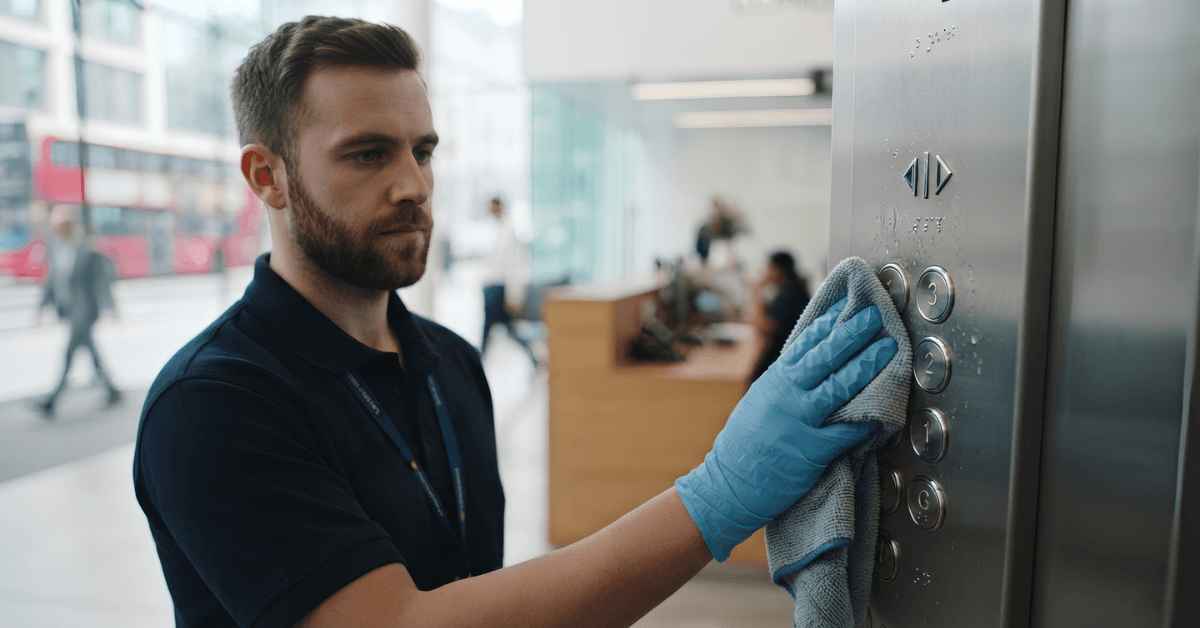
We provide both. Clients may appoint us for regular daily, weekly, monthly or longer term cleaning, as well as single deep cleans, changeovers and urgent tasks. The service model depends on the operational need rather than a fixed contract length.

The service level agreement is agreed with the client rather than imposed as a generic document. It typically sets out areas, tasks, frequency, working hours, staffing, quality measures, reporting, response times, consumables, exclusions, escalation routes and review arrangements. The scope of work supports the agreement with practical task detail.
We can price work hourly, per visit, monthly or as a fixed project figure. The method depends on service frequency, staffing, equipment, site risk and contract length. We explain the pricing basis within the proposal so the client can compare the cost with the actual scope.
We support clients across offices, hospitality, industry, education, retail, residential management and leisure. Active contracts and single projects change throughout the year, so a fixed total can become misleading. We can provide relevant sector experience, references or case information during procurement where appropriate.
We agree how the service will be delivered before work begins. If specialist cleaning work requires a subcontractor, we tell the client first and check their insurance, safety record and standard of work. The contract also makes clear who is responsible for managing and supervising that work.

Discuss Your Commercial Cleaning Requirements

A good cleaning proposal answers practical questions: which spaces need attention, how often, at what time, under which compliance controls and against which measurable standard.

Innovative Cleaning Services can assess your premises, prepare a suitable scope and provide a clear commercial proposal. To discuss regular contract cleaning, a single requirement or a specialist task, get a free quote, call 0808 280 2662 or email info@innovativecleaning.co.uk.

Recent Posts

Commercial Cleaning Services in Birmingham and the UK: The Complete Guide

Workplace Cleaning, Health & Safety Law: What Every UK Employer Must Comply With

COSHH in Commercial Cleaning What UK Businesses Must Know

What Should Be a Commercial Cleaning Specification? A Procurement Guide

Pricing Model for Commercial Cleaning in the UK? Complete 2026 Pricing Breakdown

Contract Cleaning vs Commercial Cleaning: What’s the Difference?

Seven Office Areas Most Businesses Forget to Clean

What is a Commercial Cleaning Contract? Everything UK Businesses Need to Know

Request a Quote