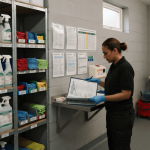
Retail Cleaning Checklist for Shops and Shopping Centres
Shoppers decide how they feel about a store within seconds of walking through the door and a surprising amount of that decision comes down to cleanliness rather than the products on the shelves. A sticky floor, a smeared glass door or an overflowing bin near the entrance can undo weeks of good marketing in a single visit. This checklist walks through exactly what needs cleaning, how often and who is usually responsible for it, whether you run a single shop or manage a shopping centre with dozens of units under one roof.
Why a Cleaning Checklist Matters for Retail Spaces
Retail cleaning is not the same job as office cleaning and treating it that way is where a lot of cleaning schedules go wrong. Shops deal with constant footfall, changing stock, chilled and refrigerated areas, fitting rooms and till points that hundreds of hands touch every day. We looked previously at the operational challenges retail cleaning teams face day to day and the common thread is that a fixed checklist, rather than a general once over, is what actually keeps standards consistent when a store is open twelve hours a day, seven days a week.
Daily Retail Cleaning Checklist Before Opening
A short pre opening routine sets the tone for the whole day and takes far less time than trying to catch up once customers arrive.
Entrance mats vacuumed or cleaned and checked for wear or slip risk
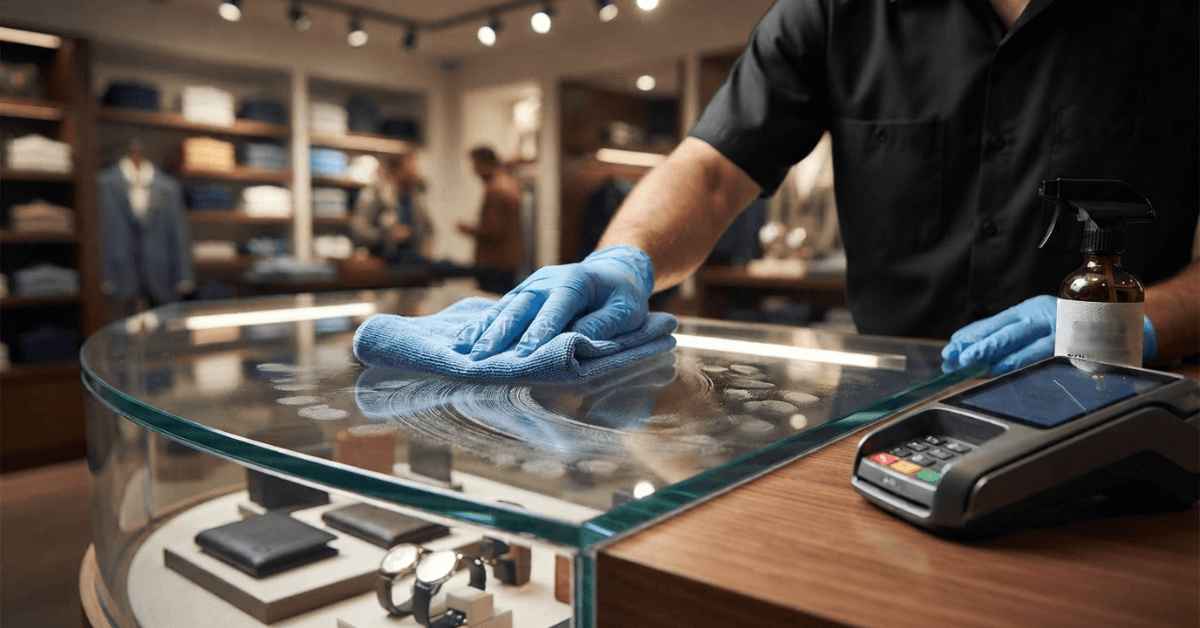
Glass doors, windows and mirrors cleaned and streak free
Floors swept and mopped, including corners and under fixed displays
Till points and self checkout screens wiped down and sanitised
Bins emptied and liners replaced
Restrooms checked, restocked and disinfected
Shelving and counters dusted, with particular attention to eye level displays
What to Clean During Trading Hours Without Disrupting Customers
This is where most retail cleaning schedules fall short, because a shop cannot simply close for an hour to deep clean. Spot cleaning during trading hours should focus on:
Spills cleaned immediately, with wet floor signage in place until fully dry
Fitting rooms reset and wiped down between customers, particularly handles, hooks and seating
High touch points such as self checkout screens, card machines, door handles and basket handles, wiped regularly through the day
Condensation or spillage around chilled and refrigerated display units, which can build up quickly and become a slip hazard
Any visible dust or marks on eye level shelving, since this is what customers notice first
End of Day Closing Checklist
Full floor sweep and mop across the entire sales area, not just high traffic zones
Waste and recycling removed from the premises, not just gathered into bins
Fitting rooms reset ready for the next day
Till areas and counters wiped and sanitised
Cleaning supplies restocked so the opening routine is not delayed the next morning
Any maintenance issues, such as a cracked tile or a leaking fridge unit, logged for follow up
Weekly and Periodic Deep Cleaning Tasks
Daily cleaning keeps a store presentable, but it does not replace the deeper work needed to maintain standards over time. On a weekly or monthly basis, retail spaces typically need:
Deep cleaning of carpets or hard floors, depending on flooring type
Window frame and external glazing cleaning
High dusting of shelving units, light fittings and air vents
Degreasing and detailed cleaning of chilled display units and stockroom shelving
Shopping Centres: Who Is Responsible for Cleaning What
This question comes up constantly and the answer genuinely does trip people up. In most shopping centres, cleaning responsibility is split between the individual retailer and the centre’s managing agent or landlord.
Inside the unit, cleaning is almost always the retailer’s own responsibility, covering the sales floor, till points, fitting rooms, stockroom and any customer facing display.
Common areas, including walkways, communal toilets, food court seating, escalators, lifts and entrances, are usually covered by a service charge paid to the managing agent, who contracts a cleaning provider for the whole centre. This is closer to a facilities management arrangement than a single shop cleaning contract and it is worth reading how contract cleaning supports long term facility success if you are involved in managing a centre rather than a single unit.
If you are unsure which category a specific area falls into, your lease agreement will set this out explicitly and it is worth checking before assuming either party is covering a space by default.
Staying COSHH Compliant in Retail Cleaning
Cleaning products used in retail settings, from glass cleaners to floor degreasers, fall under the Control of Substances Hazardous to Health Regulations, known as COSHH. This means proper storage, correct dilution, staff training and safety data sheets for every product in use, not just the ones that look obviously hazardous. Floors are also a common source of workplace injury in retail environments and the HSE’s guidance on preventing slips and trips is a useful reference point when setting cleaning frequency for high traffic areas, since a floor that looks clean can still be a hazard if the wrong product or technique has been used.
How Often Should a Retail Store Be Professionally Cleaned
Most retail units benefit from a daily cleaning routine covering floors, till points and customer facing areas, with a full professional deep clean on a weekly or fortnightly basis depending on footfall. High traffic stores such as those on a busy high street or inside a shopping centre often need cleaning multiple times a day during opening hours, not just before and after trading, since dirt and spillage build up far faster than in a lower footfall environment.
Common Questions and Issues Retailers Actually Face
These are the practical concerns that come up again and again among retail managers and store owners, on forums and in day to day conversation.
Self checkout screens get complained about constantly. They are touched by nearly every customer and rarely wiped as often as till points staffed by an employee, which makes them one of the most overlooked hygiene gaps in a modern shop.
Fitting rooms are harder to keep on top of than people expect. Between customers trying on multiple items, discarded tags and general mess, fitting rooms need a genuine reset between uses, not just an occasional tidy at the end of the day.
Chilled aisles cause condensation and mould issues if left unchecked. The moisture around refrigerated units is a slip hazard and, over time, a mould risk if the surrounding area is not cleaned as part of the regular routine, not just the unit itself.
Entrance mats wear out faster in high footfall stores than budgets often account for. A worn or saturated mat stops doing its job of trapping dirt and moisture, which then gets tracked further into the store.
Coordinating cleaning access with store alarms and security can be a genuine scheduling headache. Out of hours cleaning needs clear key holding and alarm procedures agreed in advance, particularly in shopping centres where multiple contractors need access at different times.
Budgeting for cleaning is harder to predict than expected. Costs shift with footfall, store size and how much deep cleaning is needed and it is worth understanding what actually drives commercial cleaning costs before comparing quotes from different providers.
Why Use a Professional Retail Cleaning Service
A checklist only works if it is actually followed consistently, which is where most in house arrangements start to slip once a store gets busy or short staffed. Professional retail cleaning teams, trained to BICSc standards and working to a documented schedule, remove that inconsistency and free up staff to focus on customers rather than cleaning duties squeezed in between sales.
If you manage a shop or a shopping centre unit, Retail cleaning service by Innovative Cleaning is built around exactly this kind of schedule, covering daily, weekly and periodic deep cleaning tailored to your store’s footfall and opening hours.
Daily as a minimum, with high traffic stores often needing spot cleaning multiple times throughout the day, in addition to a full clean before opening and after closing.
Common areas such as walkways, communal toilets and entrances are typically covered by the managing agent through the service charge, while cleaning inside individual units is the retailer’s own responsibility. The lease agreement will confirm which applies to a specific space.
Any product used must be stored, diluted and applied in line with COSHH regulations, with staff trained on the specific products in use and safety data sheets kept on site.
Ideally yes, or as close to it as store staffing allows. A quick reset covering handles, seating and floor space keeps fitting rooms presentable and reduces the buildup that makes a full clean take far longer later in the day.
Cost depends on store size, footfall, opening hours and how much deep cleaning is required alongside daily upkeep, so a written quote based on your specific store is the only reliable way to budget accurately.
Cost depends on store size, footfall, opening hours and how much deep cleaning is required alongside daily upkeep, so a written quote based on your specific store is the only reliable way to budget accurately.
Get a Cleaning Plan Built Around Your Store
Whether you run a single shop or manage cleaning across a whole shopping centre, a written schedule built around your actual footfall and opening hours makes far more difference than any generic checklist. Get in touch with Innovative Cleaning Services for a retail cleaning plan built around your store, or call 0808 280 2662 to discuss your requirements.