Workplace Cleaning, Health & Safety Law: What Every UK Employer Must Comply With
UK workplace cleaning health and safety laws apply across commercial, industrial, healthcare, food and public premises. You must keep the workplace clean, assess cleaning risks, control hazardous substances, protect cleaning staff and provide suitable welfare facilities.
The law sets the baseline, while risk assessments, sector guidance and product instructions determine how each cleaning task should be carried out.
The following duties show how compliance shapes the cleaning process.
What UK Workplace Cleaning Law Requires Employers to Do
Employer Duties Under UK Health and Safety Law
Under the Health and Safety at Work etc. Act 1974, you must protect employees and others affected by your work. The HSE states that employers are “required by law to protect their employees, and others, from harm”.
For commercial cleaning, assess risks associated with cleaning chemicals, wet floors, electrical equipment, waste handling, manual handling, and lone working. A workplace risk assessment should identify potential hazards, determine who may be affected, and outline the control measures required to minimise risks and maintain a safe working environment.
Support the assessment with safe procedures, equipment, training and supervision. The HSE defines a competent person as someone with sufficient “training and experience or knowledge” to assist properly.
Consult cleaners because they often notice shortcuts, blocked areas and faults before an audit. With five or more employees, write down your health and safety policy and record significant risk-assessment findings.
Cleanliness Duties Under the Workplace Regulations 1992
Your plan should cover floors, walls, ceilings and welfare areas. Act promptly on spills, damage and unsafe conditions. The HSE’s workplace welfare guidance supports regular waste removal and safe access.
Keeping your workplace compliant starts with a professional cleaning partner. Workplace cleaning services in Birmingham by Innovative Cleaning help businesses maintain hygienic, safe, and legally compliant environments through tailored cleaning schedules and industry best practices.
Six Compliance Areas That Shape Commercial Cleaning
1. Workplace Cleanliness and Welfare Compliance
Set cleaning frequencies around footfall, drainage, waste levels and shared facilities rather than one timetable for every area. Regulation 9 of the Workplace Regulations 1992 requires workplaces and fittings to remain “sufficiently clean”. (HSE)
2. COSHH and Chemical Safety Compliance
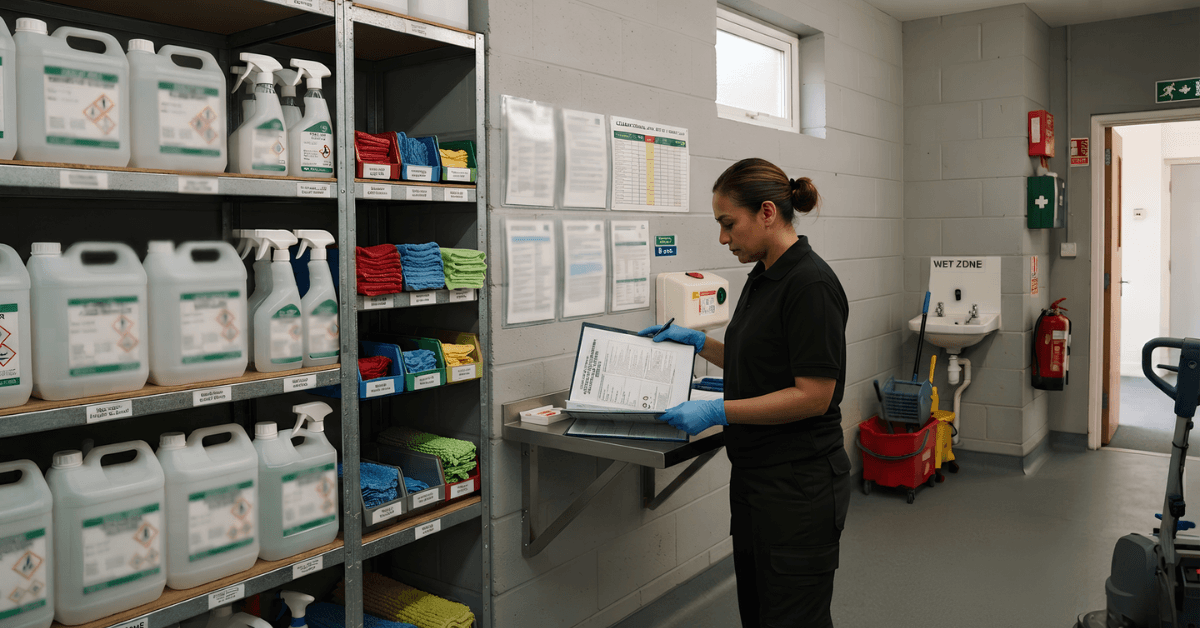
Under COSHH, assess hazardous products before use. The assessment sets out product choice, dilution, contact time, ventilation, storage and emergency action. Safety Data Sheets support, but do not replace, the workplace assessment. (HSE)
3. PPE and Cleaner Protection Compliance
Use PPE after reducing risks through safer products, equipment or methods. The assessment should set gloves, footwear, eye, apron and respiratory needs. HSE’s PPE guidance requires the necessary PPE to be free, maintained and stored correctly. (HSE)
4. Slips, Trips and Safe Access Compliance
Cleaning must not create new hazards. HSE says contamination is involved in almost all slip accidents. Work during quieter periods, clean in sections, block wet floors and keep cables from walkways. HSE floor-cleaning guidance gives further control. (HSE)
5. Equipment and Manual Handling Compliance
Machine weight, handle height, vibration and storage affect physical strain. HSE identifies musculoskeletal disorders as the most common work-related problem reported by cleaners. Reduce heavy loads, awkward postures and repeated pushing. Read the HSE guidance for cleaning work. (HSE)
6. Training, Supervision and Record Compliance
Procedures work only when staff understand them. Use clear method statements, supervision and records for work, defects and incidents. HSE warns that poor understanding can cause “inappropriate shortcuts”. HSE cleaning risk guidance supports this approach. (HSE)
How Cleaning Compliance Varies by Industry
Healthcare and Adult Social Care
For regulated health and adult social care services in England, CQC Regulation 15 requires a defined cleaning system. Risk and infection-control policies must state when cleaning, disinfection or sterilisation applies, based on infection risk, contamination, surface type and manufacturer instructions.
Clean or decontaminate shared equipment between users; never reuse single-use items. Train staff for each task and separate domestic, clinical and hazardous waste. The registered provider remains responsible for outsourced cleaning.
FR1 areas, including operating theatres and intensive care units, have a 98% target and weekly audits. Specifications must name each item, required standard, frequency and responsible person.
The standards require colour-coded equipment, frequent-touchpoint cleaning, technical and process audits, and recorded action when standards are missed.
Food Manufacturing and Hospitality
Food premises must prevent biological, chemical, physical and allergen contamination. The Food Standards Agency sets out two stages for food-contact areas: detergent removes residue, then a food-safe disinfectant remains for its stated contact time.
Offices and Retail Premises
Offices and shops work mainly under the Workplace Regulations and COSHH requirements. Footfall, opening hours and public access shape washroom checks, spill response, floor drying, shared surfaces, waste and chemical storage. (HSE)
Industrial, Manufacturing and Warehouse Sites
Industrial controls depend on machinery, substances and processes. Plans may require isolation, restricted zones, spill response, dust extraction and hazardous-waste handling. COMAH applies only above legal thresholds; DSEAR may govern fire or explosion risks. (HSE)
Education and Other Public Premises
In education and childcare, UKHSA guidance requires designated changing areas, a separate potty-cleaning sink and secure chemical storage. Keep equipment separate for classrooms, kitchens, toilets and offices. Colour-coding remains good practice, not a legal requirement.
How Compliance Changes the Commercial Cleaning Workflow
Compliance shapes each stage of work. Your Commercial Cleaning Services specification should cover planning, on-site controls and recorded close-out.
Before Cleaning: Assess and Plan the Task
Review the area, surface, contamination and people at risk. Use the risk assessment to choose methods, products, equipment, PPE and access controls. Check the Safety Data Sheet, then decide on ventilation, closure, barriers and specialist waste handling. (HSE)
During Cleaning: Control the Work Safely
Follow approved dilution, application and contact times. Keep chemicals labelled, closed and locked away from heat, food and incompatible products. Check equipment before use and keep cables outside walkways.
Restrict wet floor access and clean in sections where routes remain open. HSE says contamination is involved in almost all slip accidents, so poor timing or access control can cause preventable falls. HSE floor-cleaning guidance explains the controls. (HSE)
After Cleaning: Inspect, Store and Document
Reopen the area only when floors and routes are safe. Dispose of waste correctly, secure chemicals, return equipment to its assigned area and complete the cleaning record.
Report damaged flooring, equipment faults, spills, sharps and missed standards. The waste duty-of-care guidance covers safe handling and transfer of commercial waste. (gov.uk)
You retain duties for your premises and coordination; the contractor protects its staff. Both parties must agree on risks, controls, supervision and reporting.
There is no fixed legal interval. Review assessments after changes, incidents, near misses or worker concerns, and set a suitable periodic review date.