Seven Office Areas Most Businesses Forget to Clean
Most office cleaning routines focus on what you can see briefly: wiping desks, emptying bins and vacuuming floors. On the surface, everything is in order.
We prioritise surface-level aesthetics, relying on an “out of sight, out of mind” mindset for quick visual satisfaction.
Yet, over time, we encounter equipment deterioration and an increased risk of workplace fires, as dust and debris accumulate in certain hard-to-reach places, we might overlook.
Even well-maintained offices can have hidden spaces that are often missed during routine cleaning. This guide highlights seven areas businesses frequently overlook and explain how an experienced office cleaning service in Birmingham can help maintain a healthier, more professional workplace.
1. Behind and Under Furniture
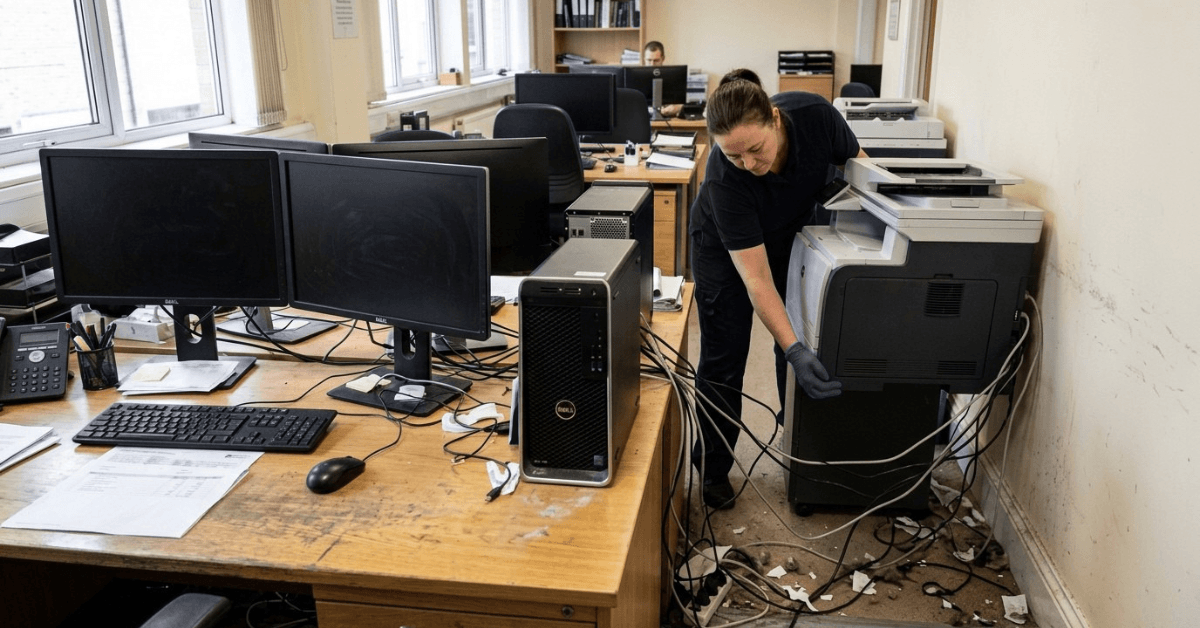
Your internal staff may do a great job cleaning desks, cabinets, meeting room seating and storage units, but the areas behind and under furniture are often neglected for long periods. We all know how much dust, paper fragments and general debris are collected in these hidden spaces.
As a supervisor, you might find yourself asking: When was the last time the furniture was moved during cleaning?
Cables running along floors or behind units also trap dirt and become difficult to manage if ignored.
Over time, this buildup can ruin the air quality in enclosed office spaces and create ideal conditions for pests to shelter.
Cleaning Frequency
Checklist
Criticality
Daily
Remove visible litter and dust around desks and furniture.
Medium
Weekly
Vacuum beneath desks, chairs and meeting room furniture.
High
Quarterly
Inspect cable management areas and remove accumulated dust and debris.
High
2. Kitchen Equipment’s
Internal microwave parts and the fridge internal system are not always cleaned with the same attention as main surfaces due to complexity involved and expertise needed. In shared environments, these points of contact become relevant to hygiene standards.
Food Standards Agency and the NHS highlight cross-contamination as a leading cause of food poisoning. They strictly advise regular, thorough cleaning of not just food surfaces, but equipment and surrounding handles.
Cleaning Frequency
Checklist
Criticality
Daily
Wipe and disinfect microwave handles, door keypads, fridge handles and other high-touch surfaces.
Critical
Daily
Remove food spills and dispose of expired food from shared refrigerators.
Critical
Daily
Check that refrigerators are operating at 5°C or below and that food is stored correctly.
Critical
Weekly
Deep clean microwave interiors, including the turntable, roof, side walls and corners to remove baked-on food residue and grease.
Critical
Weekly
Clean and sanitise refrigerator shelves, drawers, rubber door seals and internal surfaces.
Critical
Weekly
Clear blocked fridge drainage channels and inspect fan covers for dust, mould and condensation.
High
Monthly
Defrost refrigerators (where applicable), inspect internal cooling components and clean areas that are inaccessible during routine cleaning.
High
Monthly
Review the kitchen cleaning rota, replenish cleaning supplies and verify that staff are following shared kitchen hygiene procedures.
Medium
3. Sink Undersides, Tap Joints and Drainage Gradient
Whilst toilets and kitchen may be cleaned on a regular basis, sink undersides, tap joints and drainage gradients are sometimes ignored.
Hidden dampness on sink undersides and uncleaned tap joints spread bacteria and mould, making workers and employees sick.
Not checking if there is any limescale around tap joints that hardens and corrodes metal components. Seals get degraded and slow, hidden leaks occur that can rot cabinetry and ruin flooring.
Ignoring the drainage gradient and pipe interiors allows a sludge of soap scum, hair and limescale to accumulate. This restricts water flow, resulting in slow-draining sinks, foul sewer odours and complete blockages.
Cleaning Frequency
Checklist
Criticality
Daily
Clean washbasins, taps and surrounding splash areas.
Critical
Weekly
Wipe sink undersides and inspect tap joints for mould or limescale.
High
Monthly
Flush and clean internal drainage pipes where accessible.
High
Quarterly
Inspect plumbing for slow drainage, leaks and deteriorating seals.
Critical
4. Drains, Main Line Cleanouts and Exterior Gullies
Clogged pipes and blocked external gullies, caused by windblown debris, autumn leaves, silt and litter, trap wastewater and cause foul-smelling, slow drainage.
If ignored, backed-up water will overflow from multiple sinks and toilets all at once, creating hazardous flooding in your office.
Backed-up water isn’t just tapping water. It contains raw sewage, creating a severe biohazard in your workspace, requiring professional sanitisation.
Cleaning Frequency
Checklist
Criticality
Weekly
Check internal drains for slow water flow or unpleasant odours.
High
Monthly
Remove leaves, litter and debris from external gullies.
Critical
Quarterly
Inspect main drainage systems and clean accessible drain covers.
Critical
Annually (or as required)
Arrange professional drain cleaning and CCTV inspection if recurring blockages occur.
Critical
5. Air Ducts, Vents and HVAC Systems
Air filters only clean the air once it enters the system. If your metal air ducts are dirty, the clean air picks up trapped dust, grease, and germs as it travels. This hidden dirt gets blown into your room. Clogged ducts force your system to work harder, wasting electricity and shortening its lifespan.
To protect your system’s efficiency and your home’s air quality, it is recommended to change your air filters every 1 to 3 months.
Cleaning Frequency
Checklist
Criticality
Weekly
Dust external air vents and ventilation grilles.
Medium
Monthly
Inspect HVAC filters and replace or clean if required.
High
Quarterly
Clean supply and return vents.
High
Annually
Arrange professional air duct and HVAC deep cleaning.
Critical
6. Ceiling Tiles and High Surfaces
Ceiling tiles, light fittings and upper corners are often outside regular sightlines. Dust accumulation in these areas can go unnoticed for long periods.
Porous ceiling tiles trap airborne dust, pollen and smoke. Over time, circulating air can redistribute these particles, triggering allergies and respiratory issues
Accumulation of dust on exposed electrical cables or hot light fittings increases the risk of combustion.
In some cases, staining or moisture marks may appear, pointing to ventilation or roofing concerns.
Cleaning Frequency
Checklist
Criticality
Monthly
Remove dust from ceiling corners, beams and light fittings.
High
Monthly
Inspect ceiling tiles for staining, mould or moisture damage.
High
Quarterly
Clean high-level fixtures using appropriate access equipment (Step ladders or Platform steps (podium steps)
High
Annually
Replace damaged or water-stained ceiling tiles where necessary.
Medium
7. Windowsills, Frames and Glass Edges
Windows are cleaned for appearance, but the frames, tracks and sills often tell a different story.
Dust, condensation marks and debris are collected in narrow edges where cloths rarely reach during standard cleaning.
In older buildings, this can also lead to minor mould development in damp conditions.
Wind carries dust and pet hair into window cracks. City pollution and car exhaust mix with water, forming a sticky film on the glass.
Bugs, spiderwebs and insect parts also pile up in the window edges.
Cleaning Frequency
Checklist
Criticality
Weekly
Wipe internal windowsills and frames.
Medium
Monthly
Vacuum window tracks and remove trapped dust and debris.
High
Monthly
Clean glass edges, corners and window seals.
Medium
Quarterly
Inspect for mould, damaged seals or water ingress around window frames.
High
Choosing the right commercial cleaning company ensures your workplace receives consistent, high-quality cleaning tailored to your industry, schedule, and operational requirements.