Eco-friendly office cleaning is now a necessity for many businesses, yet most businesses are still mastering how to implement it right.
For office managers looking to introduce it, the questions are around costs, standards and how it works day to day.
This article will answer the main questions you may have and will provide clear, practical guidance.
Traditional office cleaning is the process of sweeping or mopping using detergents, spray cleaners and disinfectants made with harsh chemicals such as petroleum-based surfactants and high-concentration acids.
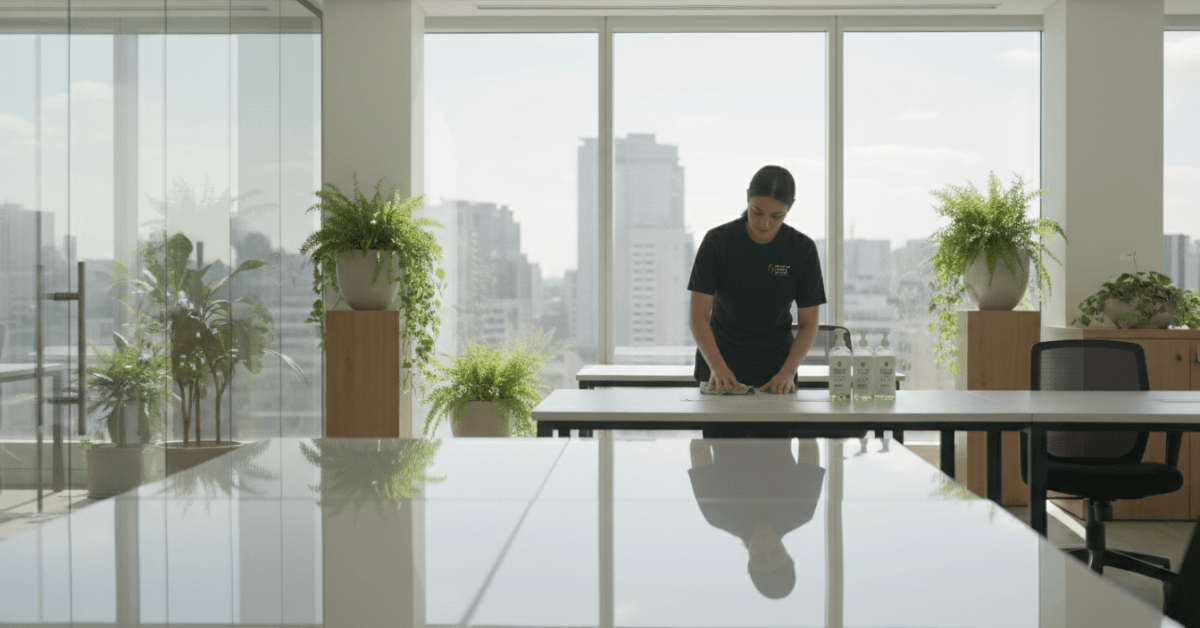
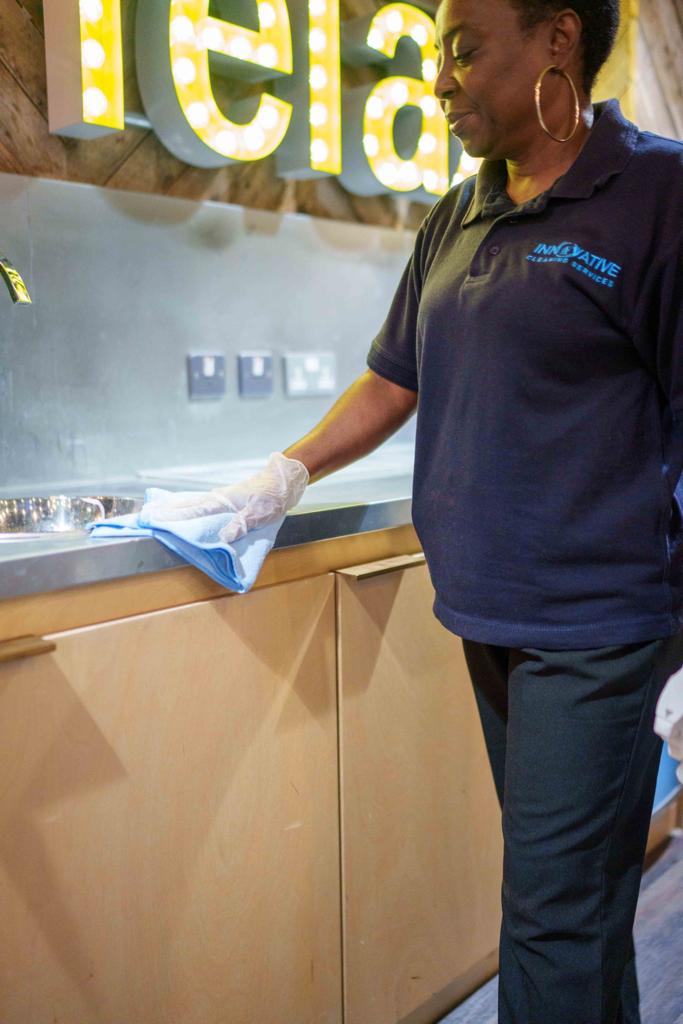
By contrast, eco-friendly cleaning uses non-toxic, biodegradable cleaning agents such as plant-based and low-toxicity cleaning products designed to reduce environmental impact. It uses microfibre cloths, sponges and washable mop heads instead of disposable paper towels.
Moving to an eco-friendly approach can involve higher upfront costs, depending on the setup. The procurement of microfibre starter kits, HEPA-filtered vacuums and concentrated cleaning items with automated dosing systems and on-site generation systems such as aqueous ozone and ECAS increases the overall cost. In addition, staff must be retrained on the proper use of green cleaning methods, colour-coded systems and dwell times.
Your sustainable cleaning procurement process doesn’t alone determine the cost of each site, which also depends on how the site operates. How the facility manages its foot traffic, waste segregation, janitorial storage and cleaning schedules dictates the baseline cost of the contract.
Therefore, as an office manager, before you compare costs by purchase volumes and how supplies are managed, first you should look at these two questions:
Do you have enough space or plumbing access to install automated dilution dispensers or on-site generation (OSG) systems? If not, you are likely to rely on ready-to-use (RTU) sprays, which are shipped predominantly as water, meaning you are paying a premium for single-use plastic packaging, transport emissions and up to a 15x markup per litre of chemical.
Do you still rely on individual under-desk bins? If your office still uses it where employees throw all waste together, it creates extra work for the cleaning team. Cleaners then have to spend paid time sorting mixed waste to meet legal requirements, which can increase the overall cost of your cleaning contract.
As a result, you can compare reporting, supply control, staff training and service quality across all locations, not just headline cost.
Cleaning quality depends more on the process than the products used. With trained staff, the right methods for different surfaces, proper use of the cleaning materials, a strict cleaning schedule, solid supervision and daily consistency all contribute to a high cleaning standard.
Balancing these three requires smart compromises. No perfect solution exists, but informed choices minimise downsides.
The aim is to be as sustainable as possible, keeping costs controlled whilst maintaining a comparable cleaning standard.
When speaking with an eco-friendly office cleaning service, check if the team holds ISO 14001 certification (for environmental management) or EU Ecolabel or Green Seal certification and review proper chemical and equipment usage. Also check that staff are trained in green cleaning techniques, product safety (COSHH) and proper dilution methods.

Home Eco-friendly office cleaning is now a necessity for many businesses, yet…
Home The reputation of a hotel is built upon the non-negotiable standards…
Home In the UK hospitality sector, the standard of cleanliness is not…
Home Running a multi-site franchise is a true challenge due to managing dozens of…
23% of hotels and 16% of guesthouses reported using eco-friendly cleaning products. Though…
Home Gym cleaning is an important part of gym facility maintenance. Your…
Home School is a vast place with complex structures. Hundreds of classrooms,…
Home Since the advent of AI, industries have experienced significant makeovers, both…