Strategic Guide to Outsourcing Hotel Cleaning for the UK Hospitality Sector
In the UK hospitality sector, the standard of cleanliness is not merely a component of guest satisfaction; it is a fundamental pillar of operational integrity and legal compliance.
For Operations Managers and executive decision-makers, the procurement of cleaning services represents a critical strategic choice.
This guide outlines practical criteria for evaluating hotel cleaning partners and building a reliable long-term service agreement.
Essential Criteria's to Outsourcing Hotel Cleaning
Starting with an important criterion that needs to be thoroughly considered, selecting a partner requires a rigorous due diligence process, which is a critical task. Operations Managers should look beyond the initial quote and evaluate potential partners based on the following professional benchmarks:
Industry-Specific Experience
The cleaning requirements of a hotel differ fundamentally from those of a corporate office or retail space. A suitable partner must demonstrate a proven track record in high-turnover environments, showcasing an ability to manage the logistics of “check-in/check-out” windows without compromising the depth of the clean.
Request Evidence
Seek at least three references from establishments of a comparable scale and star rating the hotel cleaning service provider worked with. Contact these counterparts to ascertain how the hotel cleaning provider manages high-turnover days (such as Sunday departures and arrivals) and whether they consistently meet strict check-in deadlines.
Inquire into their methods for managing staff turnover and confirm if they provide bespoke training for hotel housekeeping. This should include “knock and wait” protocols, the correct handling of “Do Not Disturb” signage and proficient, fast-paced bed-making techniques.
A truly capable partner must possess a robust contingency plan for unexpected early check-ins or last-minute bookings. This ensures the hotel remains operational and guest-ready regardless of sudden fluctuations in demand.
Verify Logistics and Time Management
Request a comprehensive, documented, room-by-room “deep clean” checklist utilised for every turnover. This ensures that every high-standard cleaning task is formalised and repeatable across your entire inventory.
A modern, efficient hotel cleaning provider should employ hotel housekeeping management software to track room status in real-time. This facilitates instantaneous communication between the front desk and the cleaning teams whilst assuring structured processes.
Enquire how they guarantee a thorough, sanitised finish, specifically targeting high-touch surfaces like TV remotes and light switches, whilst consistently adhering to the hotel’s demanding check-in deadlines.
Technical Certifications and Standards
Compliance with British and international standards provides an objective measure of a company’s commitment to quality. Therefore, it is paramount to ensure that the selected hotel cleaning company adheres to all stipulated standards.
ISO 9001: Demonstrates a robust quality management system.
BICSc (British Institute of Cleaning Science): This is the gold standard for technical competence in the UK. Ensure the provider trains their staff according to BICSc protocols to prevent cross-contamination.
SafeContractor/Chas: These accreditations verify that the company’s health and safety procedures meet rigorous external audits.
Scale and Expertise Evaluation
A robust, all-encompassing service agreement is essential to streamline operations and reduce the administrative burden of managing multiple hotel cleaning contractors. When evaluating potential partners, as a decision-maker, you should access whether the hotel cleaning provider possesses the scale and expertise to deliver the excellence you need.
Here are some of the scale and expertise a hotel cleaning provider should possess:
Process, Compliance and Safety Standards
Any reputable hotel cleaning provider must operate under a structured management system. It is vital that they provide:
RAMS (Risk Assessments and Method Statements): Detailed, site-specific documents outlining how tasks will be performed safely and efficiently.
COSHH Compliance: Strict adherence to the Control of Substances Hazardous to Health regulations, including a comprehensive register of all chemicals used on-site and their respective safety data sheets.
Standard Operating Procedures (SOPs): Clear, step-by-step instructions for staff to ensure a uniform standard of service across the entire facility.
Digital Accountability and Reporting
To provide full transparency, the hotel cleaning provider should utilise a digital checklist platform. This allows management to:
Track task completion in real-time via mobile or tablet-based logs.
Access automated audit reports to verify that KPIs (Key Performance Indicators) are being met.
Maintain a digital “paper trail” for compliance and quality insurance inspections.
Biohazard Protocols and Emergency Response
In the event of a hygiene crisis, evaluate hotel cleaning service provider must have a proven, structured response plan:
Infection Control: Specific protocols for norovirus or other outbreaks, utilising hospital-grade sanitisers and specialised PPE.
Emergency Call-outs: A 24/7 emergency contact for accidental spills or floods, backed by a trained team capable of following strict biohazard disposal procedures.
Structuring Service Level Agreements (SLAs)
A reputable contractual hotel cleaning service is only as effective as the mechanisms used to enforce it. To ensure a partnership with a top-tier cleaning provider thrives, expectations must be clearly quantified within a Service Level Agreement (SLA).
This document acts as the definitive benchmark for performance, moving away from “best efforts” toward guaranteed results.
When drafting the Service Level Agreement (SLA), ensure diligent attention is paid to the following points, ensuring they are thoroughly discussed and clarified:
1. Outcome-Based vs. Task-Based Cleaning
Traditional contracts focus on tasks (e.g., “vacuuming for 20 minutes”). However, a luxury hotel requires an Outcome-Based approach.
The Standard: We do not define how long a task takes; we define the required result (e.g., “the lobby must be free of debris and streaks at all times”).
The Benefit: This gives the provider the flexibility to use their expertise whilst ensuring the hotel only pays for a “perfect” environment, regardless of the time taken.
2. Key Performance Indicators (KPIs)
As a Hotel Manager, your primary responsibility is to protect the guest experience and our brand reputation.
To achieve this, you require a cleaning partner that moves beyond vague promises of “quality” and instead operates under a rigorous, data-powered framework.
So, when evaluating a provider, you need to look specifically for a robust Service Level Agreement (SLA) that quantifies performance through the following key metrics:
Rectification Periods: Any reported deficiency must be corrected within a strict timeframe. For example, a spill in a public area must be cleared within 30 minutes and guest room issues addressed within 15 minutes.
Audit Scores: Joint inspections should be conducted weekly. A pre-agreed rubric (scoring 1–100) should be used. Any score falling below 90% must trigger an immediate formal review and a rectification plan.
Staff Continuity: High staff turnover ruins consistency. The SLA should track retention rates; if turnover exceeds a certain percentage, it indicates a management failure that the provider must address to protect service quality otherwise penalty should be imposed as per the severity of the failure.
3. Dynamic Pricing and Financial Accountability
Rather than paying a flat monthly fee regardless of guest volume, a top-tier hotel cleaning service provider should offer a demand-based pricing structure. This ensures your operational costs scale up or down in perfect sync with your hotel’s occupancy, protecting your profit margins during quieter periods whilst guaranteeing “all-hands-on-deck” during peak seasons.
Occupancy-Linked Fees: Pricing should be calculated based on “units cleaned” or “occupancy percentage” rather than fixed hours. This shifts the focus from “how many staff are on-site” to “how many rooms are guest ready.”
Service Credits (Financial Penalties): Accountability is maintained through a “Service Credit” system. If the provider fails to meet pre-agreed KPIs, such as failing three consecutive audits or missing a 30-minute rectification window, a formal financial deduction is applied to the following invoice as discussed. This ensures the provider remains financially incentivised to deliver excellence.
Total Budget Certainty (The “All-Inclusive” Guarantee): Despite the dynamic nature of the pricing, the rate per unit must be all-inclusive. This means the price per room or area already accounts for:
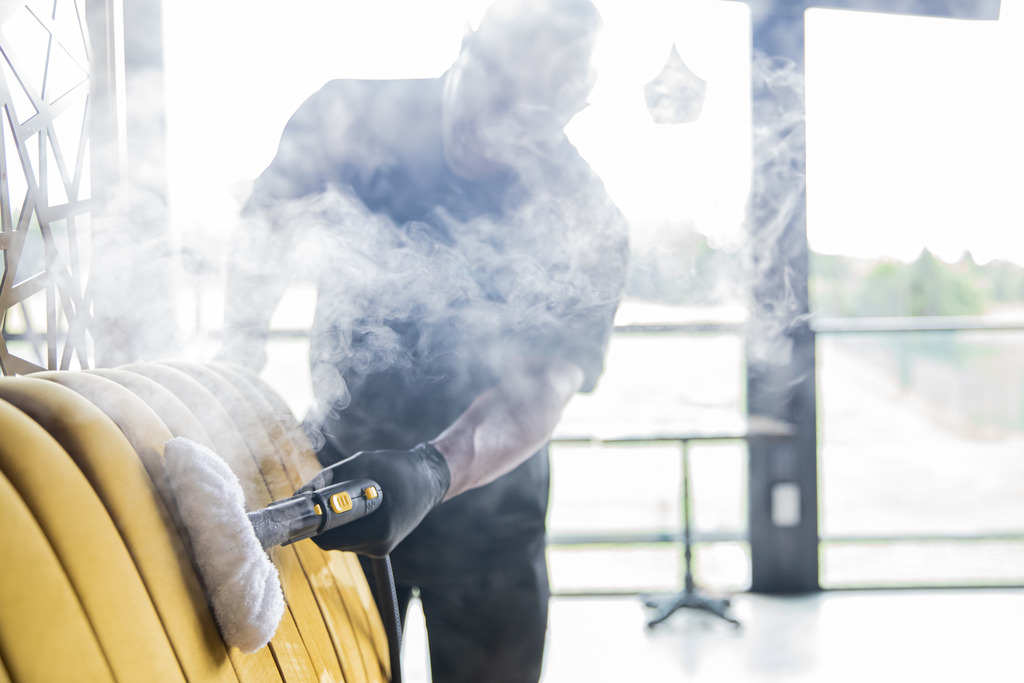
Specialist Machinery: The provision, maintenance and repair of all heavy-duty equipment (carpet shampooers, steam cleaners, etc.).
Digital Licensing: Full access to the digital checklist and auditing platform for your management team.
By focusing on outcomes and financial accountability, you ensure the provider is incentivised to maintain the high standards your guests expect, rather than just “doing enough” to get by.
The "No Hidden Extras" Clause for Financial Predictability
A hallmark of a premier cleaning partnership is the removal of “invoice creep.” In a professional hotel environment, budget volatility is a significant risk; therefore, a robust contract must include a comprehensive, all-inclusive pricing model.Under this clause, the cleaning provider assumes full financial responsibility for the operational “inputs” required to deliver the agreed standards. This includes:
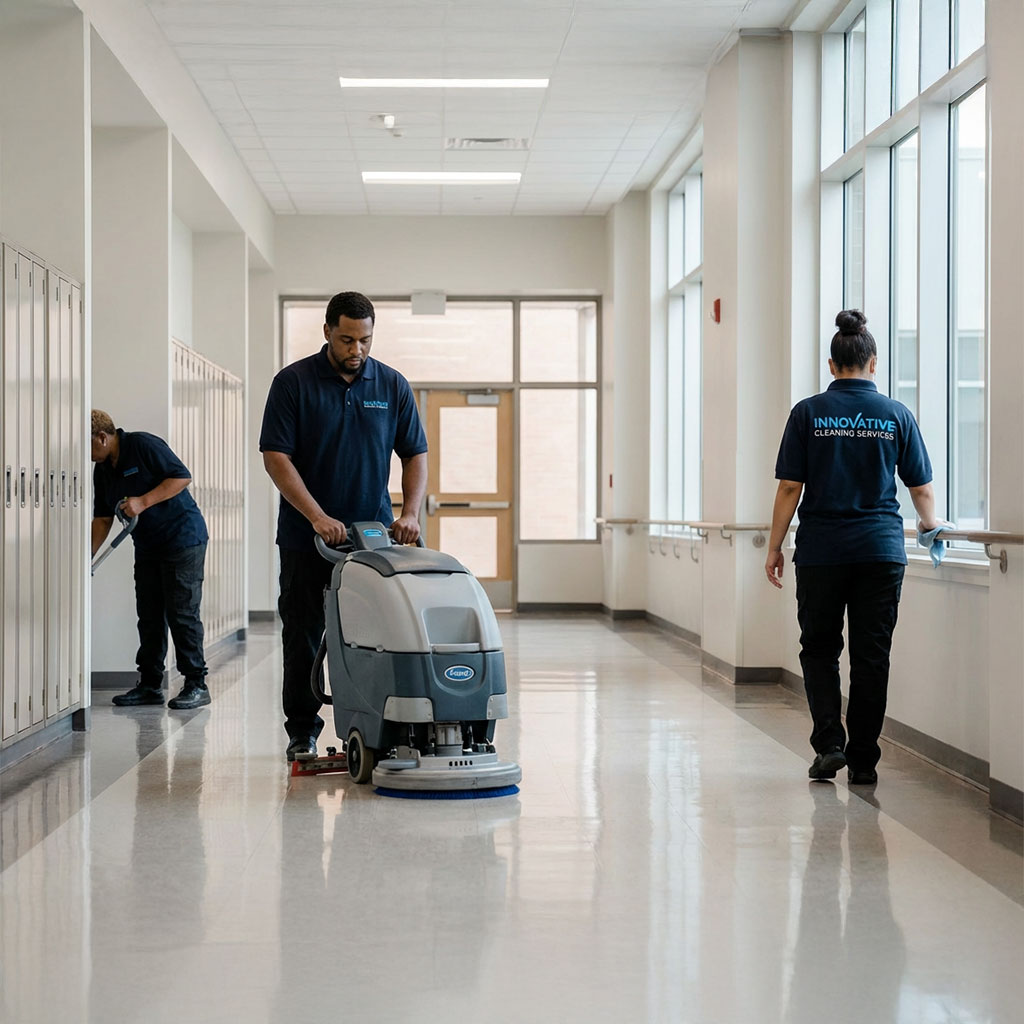
Asset Risk Management: The provider takes on the cost of equipment maintenance, repairs and replacements. If a specialised floor scrubber fails, the cost of the repair or a temporary rental falls solely on the provider, not the hotel.
Consumable Price Stability: You are shielded from market fluctuations in chemical or cleaning supply costs. A single, transparent monthly fee reflects your hotel’s actual activity levels rather than a fluctuating list of “sundries.”
Emergency & Specialist Access: The model eliminates unexpected charges for emergency call-outs or the use of specialist tools (such as high-reach window equipment or steam cleaners).
4. Digital Transparency and Evidence
The SLA must also mandate the use of a digital system to provide real-time proof of performance:
Automated Logs: Every deep clean (carpets, upholstery) must be logged with “before and after” photos uploaded to the portal.
Compliance Dashboard: Decision-makers should have 24/7 access to a dashboard showing live audit scores, chemical safety (COSHH) updates and staff training records.
5. Eliminating Hidden Costs and SLA Traps
To ensure total budget certainty, it is vital to scrutinise the Service Level Agreement (SLA) for hidden costs that often inflate the initial quote.
One common pitfall is “line-item billing” for consumables like chemicals and bin liners; to avoid this, you should insist on a fixed monthly fee or a cost-per-occupied-room model, shifting the risk of waste onto the provider.
Similarly, the contract must explicitly state that all equipment maintenance and capital expenditure are the provider’s responsibility, protecting the hotel from unexpected surcharges for repairs or machinery rentals.
You should also verify that the “routine” scope is truly comprehensive, covering essential tasks like high-level dusting and emergency spill clean-ups within the decided pricing model to prevent them from being billed as expensive “specialist” extras.
Furthermore, a professional partnership should be free from mobilisation levies, such as staff transfer fees or uniform costs, which a reputable provider should absorb as a start-up investment.
In case you are utilising a composite hourly rate pricing model, ensure to negotiate on it that averages costs across the year, ensuring you are not hit with premium surcharges for weekends or Bank Holiday coverage.
Finally, all management, supervision and digital auditing tools must be included within the core fee; you should never be charged extra for the very oversight and reporting that ensure the contract is fulfilled.
By eliminating these variable traps, you secure a transparent, “no-hidden-extras” agreement that reflects the hotel’s actual activity without the risk of invoice creeping.
Negotiating for Value
When negotiating, the focus should remain on “value” rather than “lowest cost.” A cut-price contract often leads to “ghosting” (staff shortages) or the use of inferior chemicals that can damage expensive hotel finishes over time. Ensure the quote accounts for the London Living Wage (or relevant regional equivalents) to ensure staff motivation and quality.
Operational Integration and Communication
A successful cleaning contract is not a “set and forget” arrangement. It requires integration into the hotel’s wider operational ecosystem.
As an operations manager, first, you should conduct weekly walk-throughs with the cleaning supervisor. Weekly checks help identify minor maintenance issues such as worn carpets or faulty equipment before they impact cleanliness or guest satisfaction
Second, establish a clear line of commands. In 24-hours hotel operations, knowing the point of contact for an out-of-hours emergency is essential. Most professional firms now utilise digital auditing tools that provide real-time reporting and photograph.
Sustainability and Social Responsibility
In the modern UK market, Environmental, Social and Governance (ESG) criteria are increasingly important to both investors and guests. When contracting, enquire about the provider’s environmental policy:
Chemical Usage:
Do they utilise biodegradable, phosphate-free cleaning agents?
Waste Management:
Are they proactive in reducing single-use plastics within their operations?
Water Efficiency:
Do they use modern mechanical equipment designed to minimise water consumption?
Final Procedural Steps Before Contract Execution
Before the formal signing of a cleaning service agreement, the following steps are recommended to safeguard the business:
Contractual Review: Ensure that the scope of work (SOW) is exhaustive. Ambiguity in the contract often leads to “extra” charges for tasks that should have been inclusive.
Insurance Verification: Confirm that the hotel cleaning provider holds adequate Public Liability and Employer’s Liability insurance, specifically tailored for the hospitality sector.
Reference Verification: Contact at least two current clients of a similar scale. Enquire specifically about the provider’s responsiveness during periods of high pressure or crisis.
Mobilisation Plan: Request a detailed 30-day mobilisation plan. This should outline how the provider intends to transition staff, install equipment and conduct initial deep cleans without disrupting guest operations.
Whilst daily maintenance is standard, deep cleaning of carpets and upholstery should typically occur quarterly or more frequently in high-traffic areas such as corridors and lobbies.
Most professional contracts include a “core” fee for public areas and a “variable” rate per room cleaned. This ensures the hotel only pays for the labour utilised during periods of low occupancy.
Yes. Under UK law, the employer (the cleaning company) is responsible for ensuring all staff are equipped with appropriate Personal Protective Equipment and are trained in its correct usage.
Conclusion
The decision to contract hotel cleaning services is a strategic move that enhances operational efficiency, ensures legal compliance and protects the brand’s reputation. By moving away from fragmented, ad-hoc cleaning arrangements towards a structured, professional partnership, Operations Managers can ensure that their facility remains a benchmark of hygiene excellence.
In the UK hospitality market, cleanliness is the ultimate silent ambassador for your brand. Selecting a partner who shares your commitment to quality is the surest way to ensure that every guest experience begins and ends on a high note.