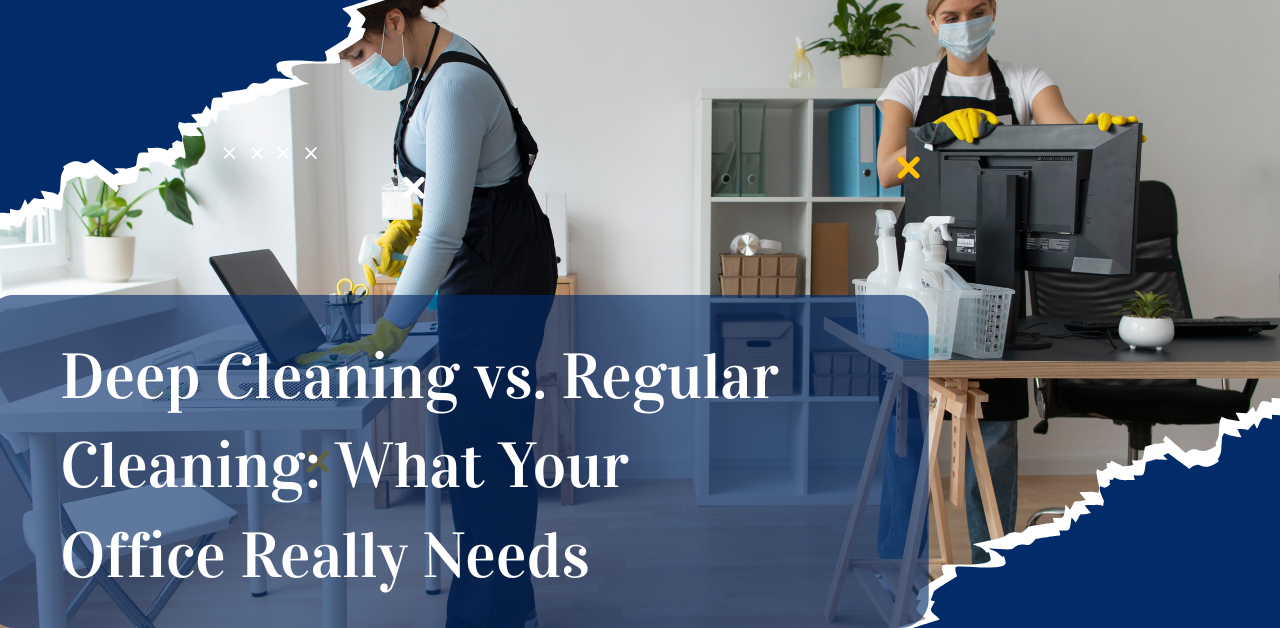
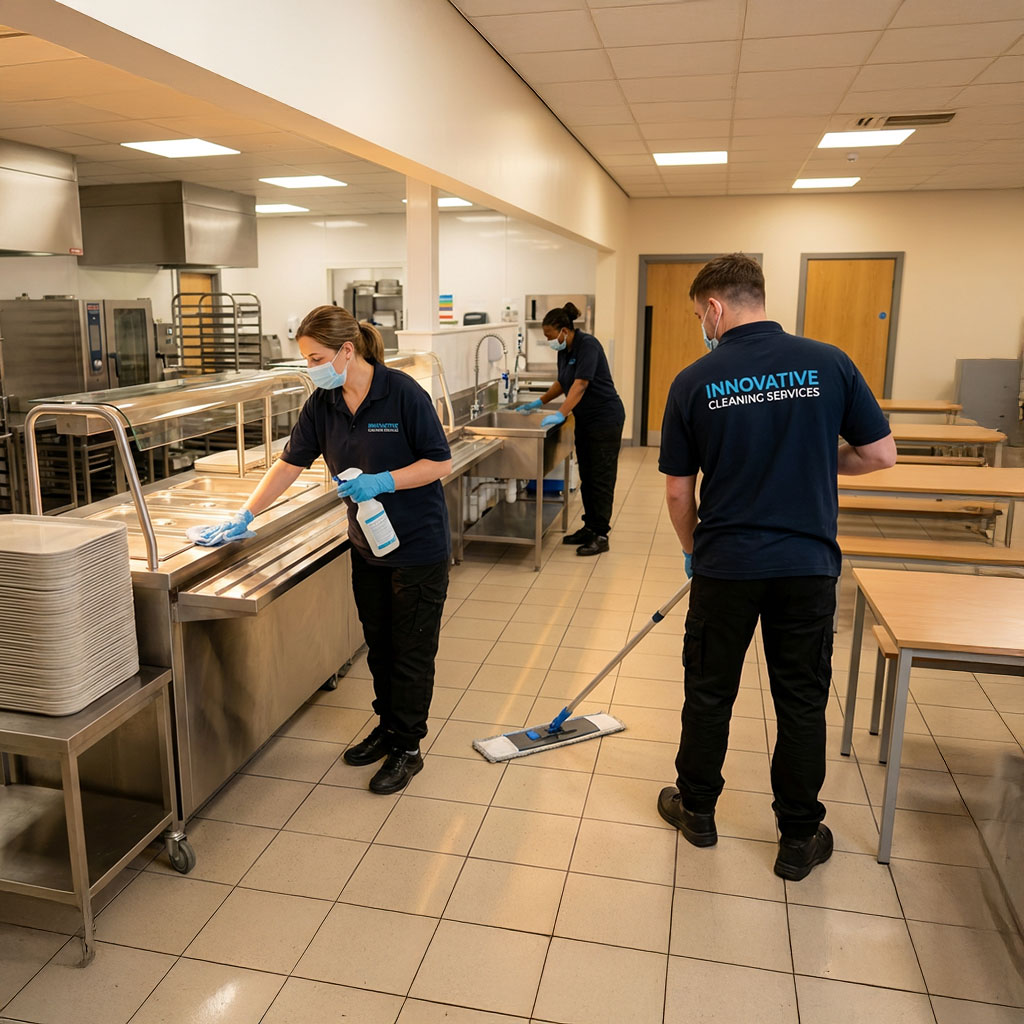
Your office is where your financial and marketing and HR operations occur, so it needs to be well-maintained and ultra-clean.
Regular cleaning is a good option, but deep cleaning also offers some of the benefits that regular cleaning won’t offer.
Here in this blog, we are going to talk about deep cleaning vs regular cleaning in detail.
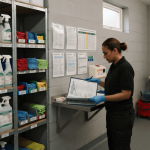
Regular office cleaning service includes tasks like emptying bins, vacuuming carpets, mopping floors, and wiping desks and meeting tables to ensure the office is ready for work.
Cleaning kitchens and benchtop surfaces, wiping sinks and splashbacks, and cleaning appliances. Washing toilet surfaces, urinals, basins, mirrors, partitions, and dispensers. Dusting reception and corridor accessible ledges and skirtings, tidy surfaces, and removing obvious marks from glass or doors. Lightly dusting rooms’ upper parts such as light fittings, vents, and fans.
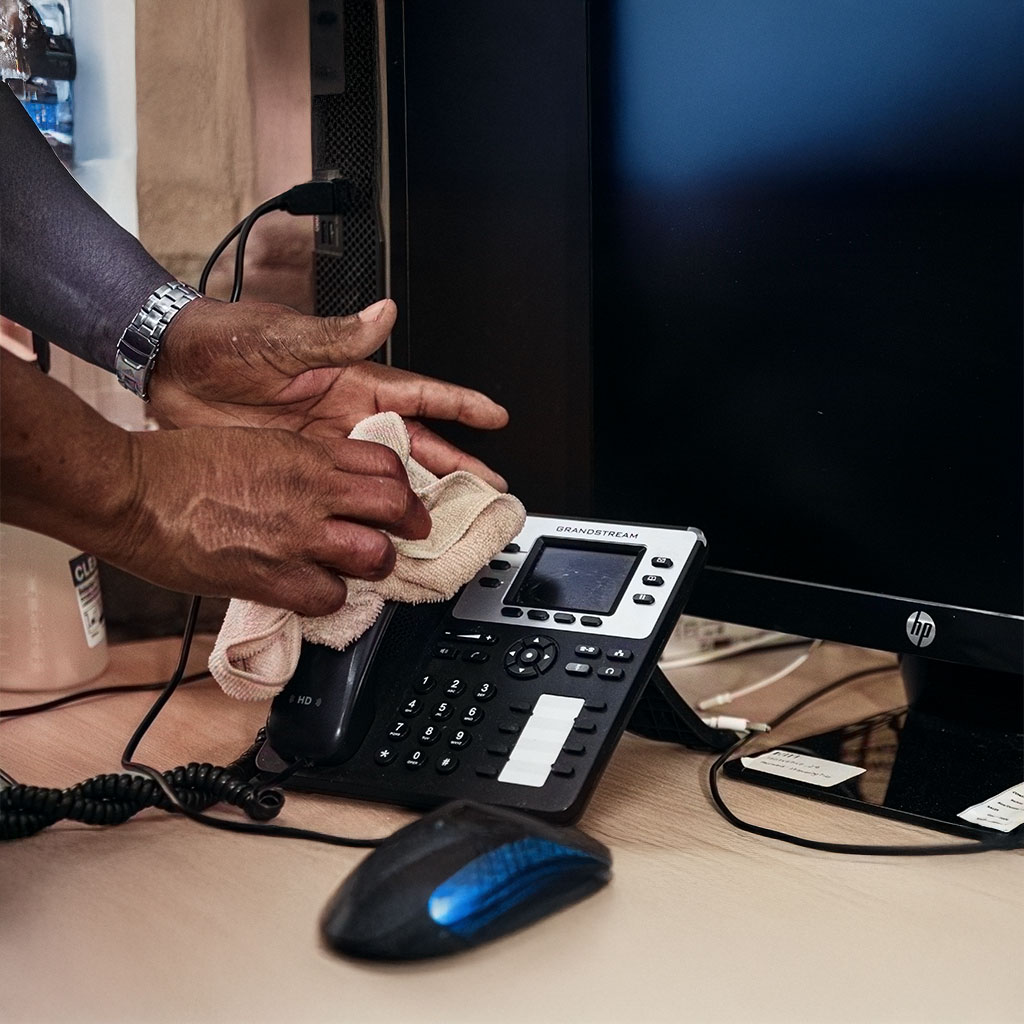
Regular cleaning also covers sanitising door handles, lift buttons, handrails, keyboards, mice, phones, touchscreens, light switches, tap handles, fridge doors, and kettle handles.
For day-to-day cleaning, neutral detergent is best on desks, tables, doors, and skirting because it lifts general soil without leaving sticky residue.
In kitchenettes and washrooms, you switch to a two-stage clean: first detergent to remove grease and grime, then a disinfectant that’s been tested to work.
Use microfibre cloths and mops to clean desks, worktops, glass partitions, and other office surfaces. These tools efficiently trap dust and dirt when you use them the right way.
On floors, a good dry vacuum or a flat microfibre mop before any damp work is non-negotiable. Tub or upright vacuums handle daily soil in open areas, and compact backpack units help you reach edges and stairs without stopping and starting.
Glass and screens prefer a low-residue approach. A small spritz of glass cleaner on the cloth (not the surface) avoids streaks and overspray on keyboards or carpets.
Your office stays ready for work each day. Desks and shared areas look clean, high-touch points are sanitised, floors are safer underfoot, and odours are under control. Regular office cleaning supports staff comfort, improves first impressions for visitors, and reduces the buildup that would otherwise demand constant corrective work.
Office deep cleaning is the thorough, top-to-bottom cleaning of your building areas, including services like carpet and window cleaning.
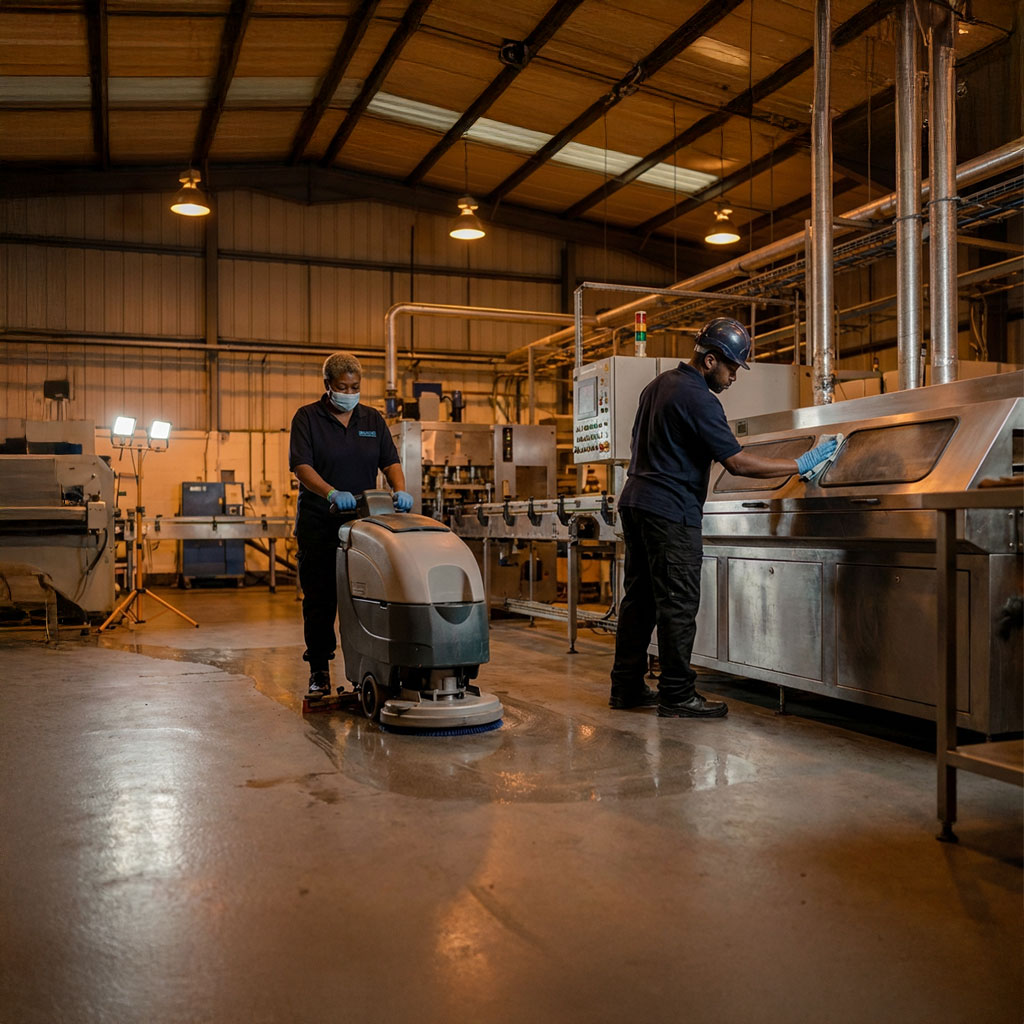
It goes beyond mopping and dusting and a quick vacuum. You will follow strict UK safety protocols while using appropriate cleaning agents and a range of powered equipment.
What it includes
In your deep cleaning process, you treat spaces or assets by type.
For carpet deep cleaning, Hot Water Extraction is the primary method used: you inject, agitate, and extract so that heavy soil and traffic lanes actually lift.
The encapsulation method is your fast, low-moisture maintenance pass that keeps carpets looking tidy between deep cleans. Bonnet cleaning is only for a quick surface spruce-up when you need an immediate appearance boost, but it doesn’t provide true soil removal. Dry Foam suits delicate carpets and tight schedules because it uses very little water.
For oven deep kitchen cleaning, you use a two-stage clean (detergent to remove grease, then a disinfectant approved for food areas).
If you use heavy-duty degreasers, COSHH applies, so you follow the data sheet and provide PPE and ventilation.
Some sites use heated soak tanks (decarbonisers) for trays and filters. It’s essential to assess the risks associated with chemicals and heat, and always follow the manufacturer’s safety guidelines.
For window deep cleaning, you choose the safest access first. Telescopic, water-fed poles with purified water let you clean multiple storeys from the ground, which helps you avoid working at height. Where that’s not possible, rope access must follow BS 7985 and the Work at Height Regulations, with competent technicians and a detailed plan.
When you deep clean an office, you get more than a shiny reception. You cut germs on the surfaces people touch, you clear dust from the air, and you remove the clutter that slows everyone down.
Deep cleaning improves productivity and focus. When carpets, vents, and high ledges stop feeding dust back into the room, indoor air quality improves, and that supports focus.
You also lower safety risks that hide in plain sight. Clearing spills, fixing sticky entrances, detailing stair rails, and keeping floors residue-free reduces slips and trips, the single biggest cause of non-fatal workplace injuries in Great Britain. That means fewer incidents, fewer forms, and a safer, steadier day for your team and visitors.
Finally, deep cleaning enhances morale and strengthens your brand. A spotless kitchen, fresh carpets, and smear-free glass make a strong first impression and help your people feel proud of where they work, which is exactly what guides on clean workspaces highlight.
In the UK, best practice regular cleaning follows BICSc methods using colour-coding to reduce cross-contamination. In cases where chemicals are used, they must be managed under COSHH, with the Safety Data Sheet (SDS) available on-site and clear dilution control in place.
For regular cleaning, EN 1276 (bactericidal) certified and EN 14476 (virucidal) British standard products are used, and the product is left on the surface for the full duration specified on the label.
Quality is checked against an agreed specification and measured with routine inspections aligned to BS EN 13549 principles.
Good cleaning service providers operate audited management systems such as ISO standards like ISO 9001 for quality, ISO 14001 for environment, and ISO 45001 for health and safety.
Also, before starting, you should have RAMS (risk assessments and method statements) that match your building, occupancy, and security rules.
Timing is very important: During office hours, cleaning can be disruptive. Make sure to clean either during breaktime or after office hours. Hiring night shifts in-house can be a good option. Otherwise, adjust the timing so it doesn’t impact office work.
Consider the office environment. Some offices are large, so the cleaning task can be lengthy, with different structures and operations involved. So, make sure to hire in-house cleaners for each department accordingly. Or a cleaning service with a solid reputation can be a good option.
Always follow the UK office safety and hygiene standards. Just mopping or dusting without any awareness of the cleaning standards doesn’t make sense, creating checklists, following all safety protocols and inspecting the areas critical to professional cleaning.
If you keep cleaning in-house, you can control the team and respond quickly. However, you may lack industry-recognised training, flexible scheduling, and adherence to COSHH compliance or other safety and hygiene standards. Additionally, there may be no safety protocols in place, and staff may lack proper training on the use of equipment.
With a professional office cleaning company, you get trained and vetted staff, RAMS, colour-coded systems, EN 1276/EN 14476 compliant products, and backup in case of staff absence. You also experience that everything is performed according to a well-structured checklist, with inspections done after every cleaning. KPI reporting is aligned with BS EN 13549. You will experience flexible scheduling and rigorous quality management, ensuring your building remains compliant and welcoming.
| Deep Cleaning | Regular Cleaning |
|---|---|
| Frequency: Occurs periodically (e.g., quarterly, biannually) to ensure thorough cleaning of the entire office. | Frequency: Done daily or weekly to maintain cleanliness and hygiene between deep cleans. |
| Purpose: Thorough top-to-bottom cleaning for heavy soil, stains, hidden dust, and overlooked areas. | Purpose: Maintains cleanliness and hygiene for everyday office use. |
| What’s Included: Deep carpet cleaning, window cleaning, appliance sanitisation, high-level dusting, washroom deep cleaning. | What’s Included: Vacuuming, mopping, desk wiping, bin emptying, and sanitising high-touch surfaces. |
| Equipment: Industrial machines like steamers, scrubbers, and hot-water extractors. | Equipment: Standard tools such as vacuums, mops, and microfibre cloths. |
| Outcome: Restores office to pristine condition and improves air quality. | Outcome: Keeps the office consistently clean and ready for daily work. |

Both regular cleaning and deep cleaning contribute to creating a productive office environment.
While regular cleaning guarantees your office stays tidy and hygienic daily, deep cleaning prevents the accumulation of hidden dirt over time, improving air quality.
By combining both, you create an environment that not only looks great but also supports the well-being and performance of your team.
Home Gym cleaning is an important part of gym facility maintenance. Your…
Home School is a vast place with complex structures. Hundreds of classrooms,…
Home Since the advent of AI, industries have experienced significant makeovers, both…
Home Your office is where your financial and marketing and HR operations…
Home You are a store manager or maybe the person responsible for…
Home Cleaning a medical facility such as a dispensary, hospital, clinic, or…
You might choose a bargain commercial cleaning company that could make your…
Cleaning an oven, whether for a commercial workplace or a restaurant, is…